The Real Deal on BBQ Sauce
What makes a great BBQ sauce? Learn the regional styles, the rosemary-and-chipotle flavor science, and why Smokin' Poppie keeps your macros clean and your plate loud.
Quick answer
BBQ sauce is a flavoring and finishing sauce for grilled and smoked food, usually built on a base of tomato, vinegar, or mustard with sweeteners and spices. The “best” BBQ sauce depends on the job: thinner, vinegary sauces brighten meat, while thick tomato-based sauces glaze and cling. For macro-friendly eating, look for a sauce that delivers bold flavor with low sugar and low calories — like The Flavor Gang’s Smokin’ Poppie Rosemary BBQ Sauce, which brings rosemary-and-chipotle punch at about 10 calories per tablespoon.
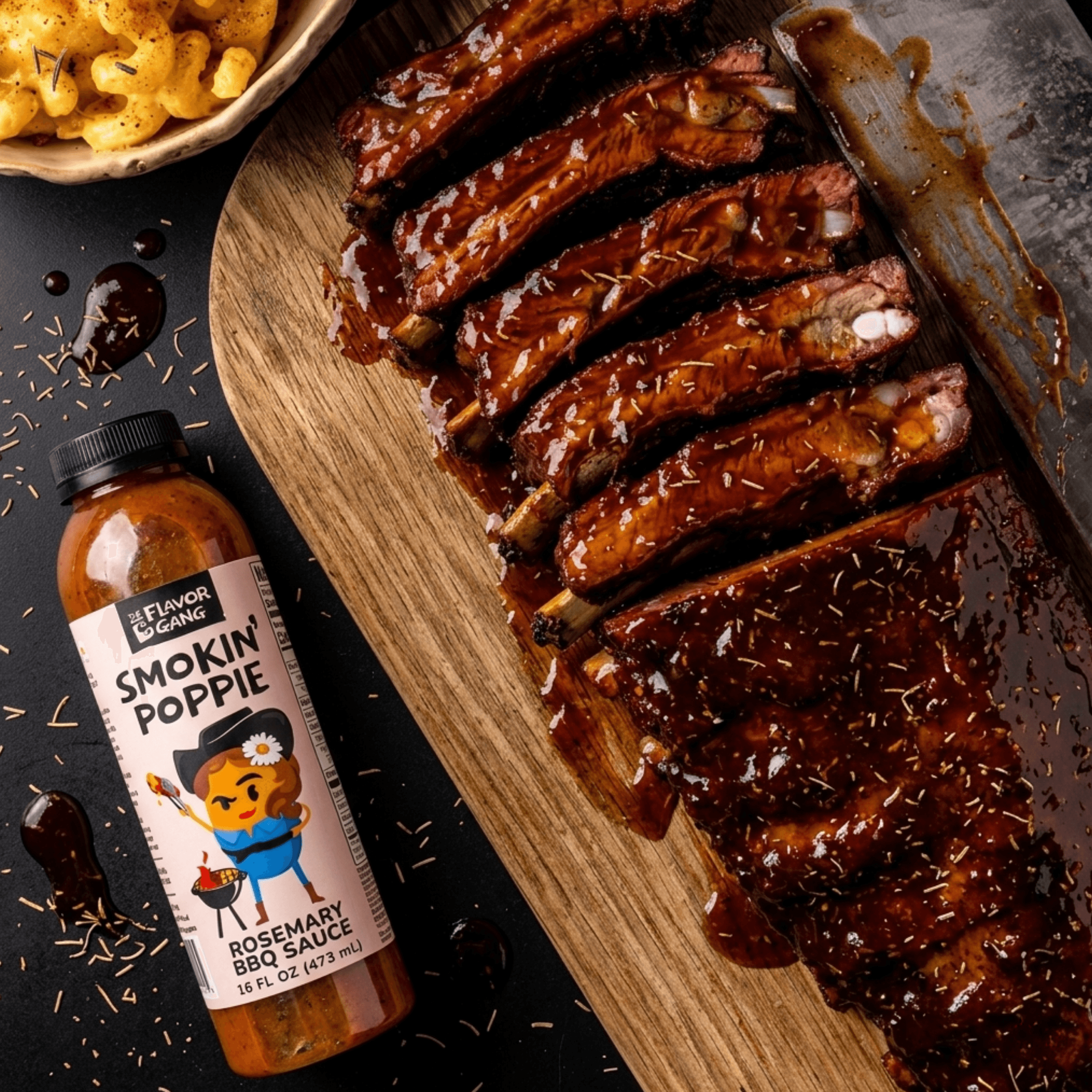
Everybody’s got an opinion on BBQ sauce. Your uncle swears by the thick, sticky stuff. Your buddy from down south won’t touch anything that isn’t straight vinegar and pepper. And somewhere in the middle is you, standing in the kitchen with a tray of grilled chicken, wondering why “eating clean” so often means eating boring. Here’s the good news: it doesn’t have to. Sauce is where flavor lives, and once you understand what actually makes a BBQ sauce good, you can keep your plate loud and your nutrition tight at the same time.
This is the Flavor Gang way — real food, real flavor, no compromise. Let’s break down what BBQ sauce really is, what separates a great one from a sugar bomb, and how to put it to work.
What BBQ Sauce Actually Is (and Why “Best” Depends on the Job)
BBQ sauce is a finishing and flavoring sauce, traditionally built to enhance smoked and grilled meat rather than drown it. Most sauces start from one of three bases, and knowing the difference is the cheat code to picking the right one:
- Tomato-based: Thick, glossy, deep red to mahogany. This is the classic, Kansas City–style sauce most people picture — sweet, smoky, and built to glaze and cling to ribs and wings.
- Vinegar-based: Thin, sharp, and tangy. Born in eastern North Carolina for whole-hog barbecue, it cuts through rich, fatty meat instead of coating it.
- Mustard-based: The golden “Carolina Gold” style from South Carolina — tangy, a little sweet, and great on pork and chicken.
So what’s the “best” BBQ sauce? Honest answer: it depends on the job. A thin vinegar sauce brightens. A thick tomato sauce glazes. The real win is a sauce that brings bold, layered flavor without forcing you to choose between taste and your goals — which is exactly the gap most bottles fail to close.
Flavor Is Built, Not Bought — The Sugar Problem
Here’s the thing nobody on the grocery aisle wants you to notice: most BBQ sauces lean on sugar to do the heavy lifting. Pour out two tablespoons of a typical bottle and you’re often looking at 8 to 16 grams of sugar — roughly the same as a few cookies — plus a healthy dose of sodium. That sugar is why supermarket sauce tastes “good” fast, and it’s also why it scorches on the grill and quietly stacks calories all week.
A genuinely great sauce builds flavor instead of buying it with sugar. It layers four things in balance: smoke for depth, acid for brightness, a touch of sweetness for roundness, and spice for the punch. Get that ratio right and you don’t need the sugar crutch at all. That’s the whole philosophy behind The Flavor Gang — maximum flavor, minimal damage to your macros.
Why Rosemary and Chipotle Hit So Hard Together
Most BBQ sauces stop at “sweet and smoky.” Smokin’ Poppie goes somewhere more interesting. Rosemary is a piney, woodsy, slightly peppery herb that adds an earthy backbone and pairs beautifully with beef, lamb, pork, chicken, and roasted vegetables. Chipotle — smoke-dried jalapeño — brings a deep, lingering heat that reads as campfire, not just “hot.”
Put them together and the herb gives the smoke something to hang onto. The rosemary keeps it from tasting flat and one-note, while the chipotle makes sure the whole thing finishes with attitude. It’s the kind of depth you usually only get from a sauce someone simmered by hand — which is the point.
Meet Smokin’ Poppie: Rosemary BBQ Sauce, Flavor Gang Style
Smokin’ Poppie hits with rosemary and chipotle comin’ in hot and smacks you right in the face with that bold BBQ punch. It’s built to level up any backyard plate — without the sugar load that usually comes with it. At around 10 calories per tablespoon and effectively zero sugar, it’s made for people who actually track what they eat and still want their food to taste like a cookout, not a cutting phase.
That’s the Flavor Gang promise in one bottle: bold flavor, clean macros, no apologies. Whether you’re prepping a week of chicken and rice or firing up the grill on a Saturday, this is the sauce that makes “eating right” taste like a reward instead of a sentence.
Four Ways to Put Smokin’ Poppie to Work
One of the best things about a low-sugar sauce is how flexible it is. Because it’s not packed with sugar, it’s far more forgiving on heat than candy-sweet bottles that burn the second they hit the grates. Here’s how to use it:
- Slow cooking: Pour it over chicken, pulled pork, or beef in the slow cooker and let it break down low and slow. The rosemary infuses the whole batch.
- Marinating: Coat your protein and let it sit for 30 minutes to a few hours before cooking. The chipotle works its way in and tenderizes as it flavors.
- Cooking and glazing: Brush it on burgers, wings, or chicken in the last few minutes of cooking so it sets into a sticky, smoky coat without scorching.
- Drizzling: Hit a finished plate — grilled chicken and rice, a loaded sweet potato, even eggs — with a fresh drizzle straight from the bottle. Big flavor, single-digit calories.
Slow cook it, marinate with it, cook with it, or drizzle it — one bottle, four jobs. That’s the kind of versatility that earns a permanent spot in the fridge.
Stop letting clean eating taste like a punishment. Grab a bottle of Smokin’ Poppie Rosemary BBQ Sauce and put real flavor back on your plate — macros intact. Welcome to the Flavor Gang. Sauce responsibly.

Written by Yana Capa-Pasco
Marketing Director