Mustard 101: Why This Ancient Condiment Belongs in Your Meal Prep
A bold, no-fluff guide to mustard’s flavors, history, and health perks — plus why The Flavor Gang’s Sweet Papi is the macro-friendly honey mustard your prep has been missing.
Quick answer
Mustard is a low-calorie, high-flavor condiment made from ground mustard seeds, vinegar, and water, with most varieties containing only 5–10 calories per teaspoon. It pairs well with high-protein meal prep because it adds bold tangy or sweet flavor without significant sugar, fat, or calories. For honey-mustard lovers, The Flavor Gang’s Sweet Papi sauce delivers that classic sweet-and-tangy profile in a macro-friendly format built for chicken, rice, and clean eating.
Mustard is one of those condiments people either treat like wallpaper or like a religion. There’s no in-between. You either squeeze it on a hot dog and forget about it, or you have three jars in the fridge and strong opinions about which goes on what. If you eat chicken and rice five days a week, you should probably be in the second camp.
Here’s the case for taking mustard seriously — and why the sweet, tangy version of it is one of the most underrated tools in clean eating.
A quick history (because mustard has been around longer than most countries)
Mustard isn’t a modern invention. Mustard seeds have been found in archaeological sites dating back roughly 11,000 years, and ancient Indian and Sumerian texts referenced the plant as far back as 3000 BCE. The Romans were the ones who turned it into the paste we recognize today — grinding the seeds and mixing them with unfermented grape juice called "must." That’s actually where the name comes from. "Mustum ardens" means "burning must" in Latin, which is a much cooler origin story than ketchup will ever have.
From there, mustard spread through Europe. French monasteries were cultivating and selling it by the 9th century. Dijon, France became the mustard capital of the world in the 14th century. In 1814, Jeremiah Colman invented his famous powdered English mustard. And in 1904, French’s introduced bright yellow ballpark mustard at the St. Louis World’s Fair — the same one that gave us ice cream cones. Thousands of years of refinement, all leading to a squeeze bottle.
The mustard family tree
Not all mustard tastes the same, and once you understand the differences, you stop reaching for the wrong one. Here’s the short version:
- Yellow mustard — The American classic. Made from yellow seeds, vinegar, and turmeric (which is what gives it that color). Mild, tangy, and built for hot dogs and burgers.
- Dijon — Made with brown or black seeds and white wine. Sharp, creamy, and slightly spicy. The mustard you reach for when you’re making a vinaigrette or a pan sauce.
- Spicy brown — Coarser, earthier, with a kick. Also called deli mustard for a reason. It belongs on pastrami and sausage.
- Whole grain — Seeds left mostly intact. Rustic texture, mellow heat, gorgeous on a charcuterie board.
- Honey mustard — The sweet one. A blend of mustard and honey that tames the heat and bitterness with smooth sweetness. The most snackable, dippable, addictive of the bunch.
Honey mustard is the one that crosses over. It’s the dip for chicken tenders, the dressing for salads, the glaze for roasted carrots, the secret weapon for boring meal-prep chicken. It’s where mustard stops being a condiment and starts being a vibe.
Why mustard is quietly one of the best condiments for your goals
Most condiments are calorie traps. Two tablespoons of standard ranch can run you around 140 calories. Mayo can hit 200. Even "honey mustard" from a packet at a fast food spot can drop 12 to 18 grams of sugar into your meal before you’ve taken a bite. Regular mustard, on the other hand, sits at around 5 to 10 calories per teaspoon and is naturally fat-free.
Beyond the macros, mustard seeds bring real nutrition to the table. They’re part of the same Brassicaceae plant family as broccoli, cabbage, kale, and Brussels sprouts. The seeds are a source of selenium, magnesium, manganese, and fiber, and they contain compounds called glucosinolates that have been studied for antioxidant and anti-inflammatory effects. Mustard also contains omega-3 fatty acids and may help slow carbohydrate digestion, which is useful if you’re trying to keep blood sugar steady through a long workday.
You’re not eating mustard like a multivitamin — nobody is. But when you’re comparing it to the average sauce, mustard is genuinely one of the cleanest ways to add flavor to a meal. The catch is most flavored mustards, especially honey mustards, sneak in oils and sugar. That’s where the sauce you actually choose matters.
Where Sweet Papi comes in
This is the part where we tell you what we built and why. Sweet Papi is The Flavor Gang’s sweet-mustard-style sauce, and it’s the closest thing to a cheat code for meal-prep chicken we’ve ever put in a bottle. If honey-mustard is your love language, Sweet Papi is your new sidekick.
The whole reason it exists is simple: most honey mustards on the shelf are either delicious and full of sugar, or "healthy" and taste like vinegar and regret. Sweet Papi splits the difference. It’s the sweetest mustard-style sauce on shelves, dialed in for huge flavor with low calories — so you can drown your prep without blowing your macros. It turns the boring chicken-and-rice plate (you know the one, the one you stare at by Wednesday) into something you actually look forward to.
Drizzle it. Dip it. Glaze it. Mix it into a wrap. Use it as a salad dressing when you can’t deal with one more boring side. It works on grilled chicken, ground turkey, roasted veggies, sweet potatoes, salmon, and yes — chicken nuggets when you’ve earned them. It’s the kind of sauce that makes "eating clean" feel less like a punishment and more like dinner.
Three easy ways to put Sweet Papi to work this week
- The 5-day meal prep glow-up. Cook off your usual batch of chicken breast or thigh, portion it with rice and a vegetable, and pack a small container of Sweet Papi on the side for each box. Drizzle right before eating so the chicken doesn’t get soggy. Same prep — five completely different lunches in mood, same in macros.
- The honey-mustard wrap. High-protein tortilla, shredded chicken, spinach, red onion, shredded cheese, and a heavy drizzle of Sweet Papi. Roll it. Crisp it on a dry pan for 90 seconds a side. You’ll forget you’re in a deficit.
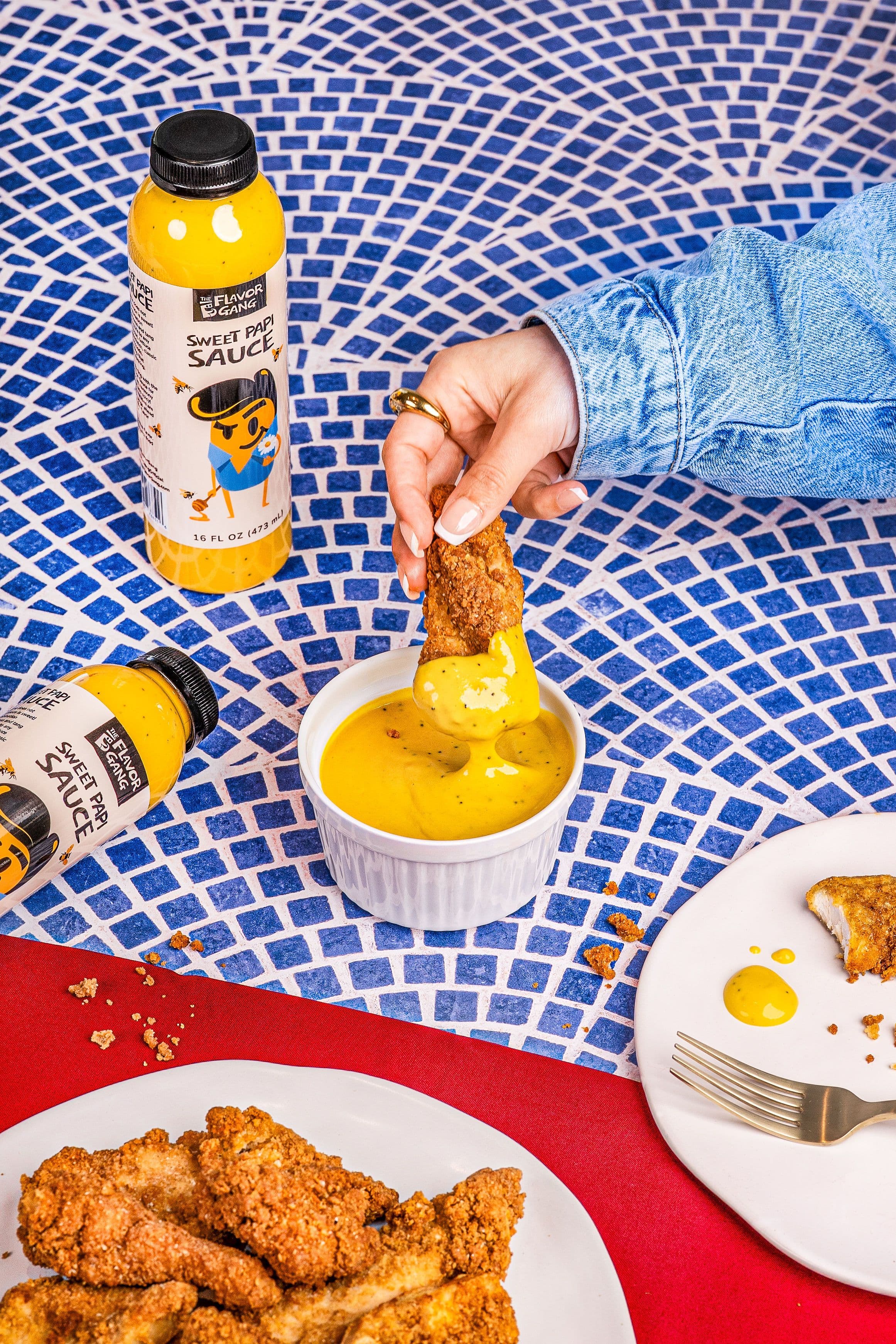
- The crispy snack hack. Air-fry chicken bites, popcorn shrimp, or even cottage cheese tots, then dip. Sweet Papi was basically engineered for this. Treat-food experience, prep-food numbers.
The bottom line
Mustard has had a 5,000-year head start on every other sauce in your fridge. It’s low-calorie, naturally fat-free, packed with plant compounds, and it makes lean protein actually taste like something. The sweet-and-tangy version of it — honey mustard — is the easiest way to bridge the gap between "I’m being disciplined" and "I actually want to eat this."
Sweet Papi is our take on that bridge. Big flavor, low calories, built for the way real people eat when they’re trying to stay consistent. Grab a bottle, put it on something boring, and watch that meal stop being boring.
Try Sweet Papi at theflavorgang.com and tag us when you find your favorite way to use it. We collect them.

Written by Yana Capa-Pasco
Marketing Director