Handcrafted Food: What It Actually Means (And Why You Can Taste It)
Handcrafted gets slapped on everything. Here’s what it actually means, why it changes the flavor, and how The Flavor Gang earns the word one batch at a time.
Quick answer
Handcrafted food is made primarily by hand in small batches, with a real person controlling each step instead of a fully automated line. Because “handcrafted” isn’t a government-regulated term, the label only means something when a brand actually does the work — like The Flavor Gang, which makes every sauce, seasoning, and Bowl O’ Gainz by hand in Gonzales, Texas.
Everybody Says “Handcrafted.” Almost Nobody Means It.
Walk down any grocery aisle and you’ll see it on everything — jars, bags, bottles, frozen dinners. “Handcrafted.” “Small-batch.” “Artisan.” It sounds warm and homemade, like somebody actually stood over a pot and gave a damn. The problem is that most of the time, nobody did. A machine ran the whole thing and a marketing team added the word afterward.
Here’s the part the labels won’t tell you: “handcrafted” has no legal definition. The FDA doesn’t regulate it, and there’s no standard a company has to meet before printing it on the front of a package. The FTC only asks that claims be truthful and not misleading — so if machines mix and bottle the product, calling it “handcrafted” is, at best, a stretch. The word does the selling whether or not the work was ever done by hand.
That’s not a reason to roll your eyes at every label. It’s a reason to learn what the real thing looks like — because when handcrafting actually happens, you can taste it.
What Handcrafting Actually Does to Your Food
Strip away the marketing and handcrafted comes down to one idea: a person is in the loop. Instead of a sealed industrial line tuned for maximum output, someone is tasting, adjusting, and watching each batch from start to finish. That hands-on control is where the flavor difference is born, and it shows up in a few concrete ways.
- Attention at every stage. When a human is stirring and tasting, they catch the things a sensor doesn’t — a spice that needs more time, a sauce that’s a touch thin, a batch that just isn’t right and shouldn’t ship.
- Small batches, fresher product. Making less at a time means less sitting in a warehouse and more attention per bottle. Quality stays tight because nobody’s chasing a millionth unit.
- Real ingredients, fewer shortcuts. Mass production often leans on fillers, gums, and excess sugar to keep a product cheap and shelf-stable forever. Handcrafted makers don’t need those crutches to hit a consistent result.
- Character over uniformity. Industrial food is engineered to taste identical down to the molecule. Handcrafted food has a little soul to it — bold, layered, and made to actually taste like something.
None of this means handcrafted is “better” just because it’s slower. It’s better because the person making it cares whether it’s good. That’s the whole point.
Handcrafted Doesn’t Have to Mean a Sugar Bomb
Here’s where most “bold flavor” food loses the plot. The handcrafted sauces and treats that actually taste incredible are usually loaded with sugar and calories, because sugar is the lazy way to make something crave-able. So you’re stuck choosing: flavor that wrecks your macros, or “clean” food that tastes like cardboard and obligation.
That’s the trade-off The Flavor Gang was built to kill. The same hands-on control that makes a batch taste bold is exactly what lets you skip the sugar dump and dial in flavor a smarter way — with real ingredients, clean labels, and low-calorie builds that still hit. Bold flavor, clean ingredients, zero excuses. You shouldn’t have to choose between eating well and eating something you actually look forward to.
How The Flavor Gang Earns the Word
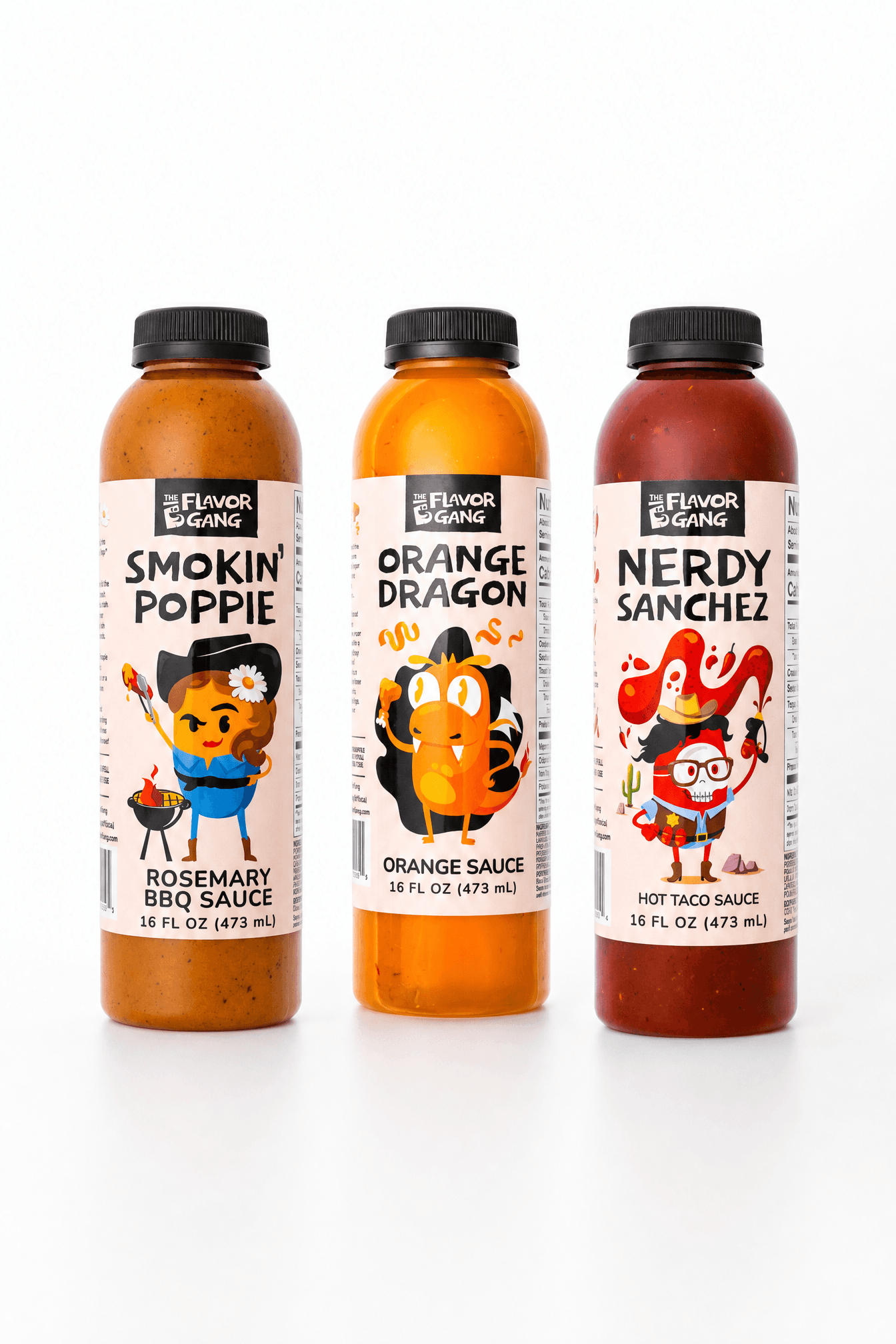
The Flavor Gang started in a tiny kitchen — founders who moved from Maryland to Texas, built a name for real food, and turned it into a brand. Even now that the Gang has grown into an international crew of food lovers, the work hasn’t changed: every batch is still made by hand in Gonzales, Texas. Not “handcrafted” in a press release. Handcrafted in the actual sense — mixed, tasted, and bottled with someone paying attention.
That hands-on standard runs through the whole lineup: low-calorie sauces that punch up any meal without the sugar crash, Bowl O’ Gainz cream of rice that eats like dessert but fits your macros, and seasonings built to make clean food taste like you cheated. Small-batch quality, clean labels, and flavor that earns its place on your plate — one meal at a time.
So the next time a label brags that it’s handcrafted, ask the obvious question: by whose hands, and where? When the answer is “a real kitchen in Gonzales, Texas,” you already know what it’s going to taste like.

Written by Yana Capa-Pasco
Marketing Director