Food Prep Meals: How to Prep a Week of High-Protein Meals That Don’t Taste Boring
Healthy food prep meals made simple. High-protein recipes with macro-friendly sauces, a budget grocery list, storage rules and time-saving tricks for a week of meals.
Quick answer
Food prep meals are meals you cook in batches ahead of time, portion into containers, and eat over the next few days. The simplest healthy approach is to pick one or two lean proteins, one or two smart carbs, and a couple of vegetables, cook them in a single 60–90 minute session, and store them in the fridge for up to 3 to 4 days (or freeze them for later). Keep sauces and seasonings flexible so the same base ingredients turn into different meals all week.
Let’s be honest. Most people don’t fall off their diet because they don’t know what to eat. They fall off because it’s 7:30 p.m., they just got home from work or the gym, there’s nothing ready, and the drive-thru is four minutes away. Food prep meals fix that exact moment. When a solid, high-protein meal is already sitting in your fridge, eating well stops being a decision and starts being the default.
The catch is that a lot of meal prep is just sad. Dry chicken, plain rice, steamed broccoli, repeat until you quit. This guide is about doing it the other way: real food, smart macros, a grocery list that doesn’t wreck your budget, and enough flavor that you actually look forward to lunch.
Why Food Prep Meals Actually Work
This isn’t just gym folklore. In a study of more than 40,000 French adults published in the International Journal of Behavioral Nutrition and Physical Activity, people who planned their meals ahead were more likely to follow nutrition guidelines, ate a wider variety of foods, and were less likely to be obese than people who didn’t plan. The researchers were clear that the study shows a link, not proof of cause, but the pattern lines up with other work. A University of Washington study of adults in Seattle found that people who spent less than an hour a day on food prep at home leaned more on fast food and spent more money eating out.
Translation: the hard part of eating well usually isn’t knowledge. It’s time and decision fatigue. Batch prepping handles both in one shot.
How to Plan Your Food Prep Meals (The Simple Formula)
Forget complicated meal plans. Build every container from the same four parts and you can prep for the week without a spreadsheet.
Protein first. This is the anchor of the meal and the part that keeps you full. Aim for a palm-to-a-palm-and-a-half sized portion per container, which for most people lands somewhere around 30 to 45 grams of protein depending on the cut. Chicken thighs, chicken breast, 93% lean ground turkey, lean ground beef, eggs, shrimp, and Greek yogurt are all easy wins.
Smart carbs second. Rice, potatoes, sweet potatoes, oats, whole-grain pasta, and beans fuel your training and make the meal feel like a real meal. Adjust the portion to your goal: a bigger scoop on heavy training days, a smaller one if you’re cutting.
Vegetables third. Roasted peppers, broccoli, green beans, zucchini, onions and spinach hold up well for a few days. Two different vegetables per week is plenty to keep things interesting.
Flavor last, and never skipped. This is where most meal prep dies. Fats like olive oil, avocado and cheese add richness, but they add calories fast. A bold, macro-friendly sauce or seasoning gives you the payoff without blowing up your numbers, and it’s the easiest way to make Monday’s chicken taste nothing like Wednesday’s.
Budget-Friendly Grocery Shopping for Meal Prep
Eating high-protein doesn’t have to mean spending a fortune. Chicken thighs, whole eggs, dried or canned beans, lentils, canned tuna, cottage cheese and bulk rice are consistently among the cheapest protein and carb sources per serving at most US grocery stores. Thighs in particular are a meal prep cheat code: they’re usually cheaper than breasts and they stay juicy after reheating.
A few shopping habits make a bigger difference than any coupon:
- Shop from your plan, not your cravings. Write the week’s proteins, carbs and veggies down before you go, and buy only what fits the formula.
- Buy proteins in family packs. Cook what you need and freeze the rest raw in portioned bags.
- Lean on frozen vegetables. They’re picked and frozen at peak ripeness, they last for months, and they cut prep time to zero.
- Buy rice, oats and dried beans in bulk. They’re shelf-stable and almost always cheaper per pound in bigger bags.
- Let sauces do the heavy lifting. One bottle of sauce can flavor a dozen meals, which is far cheaper than buying pre-marinated meats or takeout.
Flavor Without the Calorie Tax
Here’s the part most meal prep guides skip. The sneakiest calories in a prepped meal usually aren’t in the chicken or the rice. They’re in what you pour on top. A standard two-tablespoon serving of ranch runs about 130 calories and 13 grams of fat, according to USDA data. Regular mayo is around 90 calories per tablespoon, and a lot of bottled BBQ sauces land somewhere between 60 and 100 calories per two tablespoons, most of it from sugar. Put ranch on your lunch and dinner containers for a five-day work week and you’ve quietly added about 1,300 calories from dressing alone.
That’s exactly the problem The Flavor Gang was built to solve. Our sauces are made to be macro-friendly: bold, punchy flavor in a small pour, without the oil-and-sugar base that drives up the calories in most condiments. Check the nutrition panel on your bottle for exact numbers, but the idea is simple. You keep the flavor that makes you want to eat your prep, and you drop the calories that quietly stall your progress.
In meal prep, The Flavor Gang sauces and seasonings do three jobs:
- Marinade. Mix a few tablespoons of sauce into raw chicken, turkey or steak with a splash of lime juice or vinegar, and let it sit for 30 minutes or overnight. The flavor cooks into the meat instead of just sitting on top.
- Mix-in. Stir sauce into plain Greek yogurt or blended cottage cheese for creamy dressings and dips that add protein instead of fat.
- Finisher. Drizzle a fresh hit of sauce on after you reheat. It wakes up day-three leftovers and keeps your rice and veggies from going soggy in the container.
Flavor Gang seasonings handle the cooking side. Use them on proteins, roasted vegetables and potatoes in place of sugary store-bought marinades and seasoning packets.
5 High-Protein Food Prep Meals Packed With Flavor
Each recipe makes roughly four containers and uses ingredients from any grocery store. Every one of them gets its flavor from The Flavor Gang instead of butter, sugar-heavy glazes or full-fat dressings.
1. Sweet Heat Chicken Thigh Rice Bowls
Toss about 2 pounds of boneless, skinless chicken thighs with a Flavor Gang seasoning blend, a few tablespoons of a sweet-and-spicy Flavor Gang sauce like Sriracha Maple, and a splash of rice vinegar. Let them marinate for at least 30 minutes, or overnight if you’re prepping the day before. Roast on a sheet pan at 425°F for 20 to 25 minutes until they reach 165°F inside. Use the other half of the pan for broccoli and red onion seasoned with the same blend. Divide over jasmine rice and pack a small cup of extra sauce to drizzle on after reheating. That sticky, glazed takeout finish usually comes from honey or brown sugar. Here it comes from the sauce, so you get the flavor without the sugar load.
2. Chipotle Turkey Burrito Bowls
Brown 2 pounds of 93% lean ground turkey with diced onion and a Flavor Gang seasoning in place of a store-bought taco packet. As the meat finishes, stir in a few tablespoons of a smoky chipotle-style Flavor Gang sauce so every bite is coated. Add a can of rinsed black beans and some fire-roasted corn, then portion over rice or cauliflower rice with sautéed peppers. Skip the sour cream and make a quick chipotle crema instead: plain Greek yogurt, a spoonful of the same sauce and a squeeze of lime. It’s creamy and smoky, and it adds protein where sour cream would add fat.
3. Dill Ranch Chicken Pasta Salad (No Reheating Needed)
Season chicken breasts with a Flavor Gang seasoning, then grill or air-fry them and dice. Cook whole-grain or protein pasta, rinse it under cold water, and toss it with the chicken, cucumber, cherry tomatoes and red onion. For the dressing, whisk about three-quarters of a cup of plain Greek yogurt with a few tablespoons of a ranch-style Flavor Gang sauce like Dill Ranch and a squeeze of lemon. You get the cool, herby ranch flavor everyone loves, built on a high-protein base instead of the oil-heavy bottled kind. Pack the dressing separately if you want the pasta to stay firm through day four.
4. Steak and Potato Power Plates
Cube 1.5 pounds of sirloin and 2 pounds of baby potatoes. Hit the potatoes with olive oil spray instead of a heavy pour of oil, season them generously with a Flavor Gang seasoning, and roast until crispy. Season the steak bites with the same blend and sear them in a hot skillet for a few minutes per side. Plate with green beans and pack a bold steak-style Flavor Gang sauce for dipping instead of a butter baste or creamy horseradish. Steak bites reheat best in a skillet for a minute or two. Add the sauce after so it tastes fresh.
5. Grab-and-Go Breakfast: Egg Bites and Bowl O’ Gainz
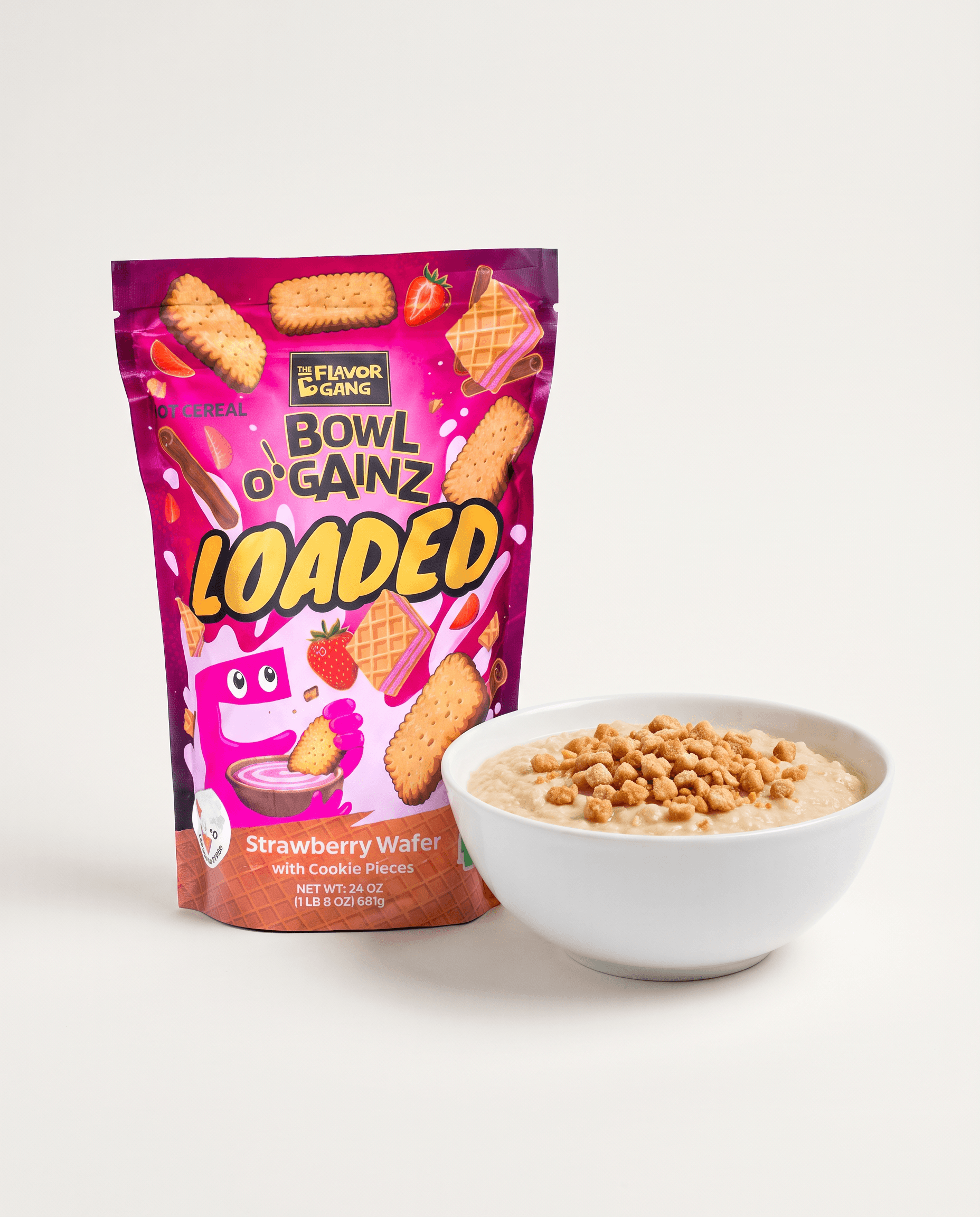
Breakfast is the meal people skip most, so prep it too. Whisk a dozen eggs with chopped spinach, peppers and a little cheese, season with a Flavor Gang seasoning blend, and bake in a greased muffin tin at 350°F for about 20 minutes. A drizzle of your favorite Flavor Gang sauce on top makes them taste like a breakfast-sandwich shop without the greasy biscuit. Pair two or three egg bites with a bowl of Bowl O’ Gainz, The Flavor Gang’s flavored cream of rice. Pre-portion the dry cereal and a scoop of your protein powder into jars on prep day, then just add hot water or milk on busy mornings. You get a dessert-flavored breakfast without the syrups and toppings that usually come with one.
Bonus: One Batch, Three Different Meals
If you only have time to cook one protein, make it count. Roast 3 pounds of chicken with nothing but a Flavor Gang seasoning, then let the sauces change the meal. On Monday it’s a sweet heat rice bowl, on Tuesday a ranch chicken wrap, and on Wednesday a chipotle chicken salad. It’s the same chicken and the same prep time, with three meals that taste nothing alike. That rotation is what keeps people prepping in week six instead of quitting in week two.
Time-Saving Cooking Techniques
The goal is to get a full week of food prep meals done in about an hour to an hour and a half. The trick is running everything in parallel instead of one dish at a time. Start your rice or potatoes first since they take the longest, then get a sheet pan of protein and a sheet pan of vegetables into the oven at the same time. While those cook, brown your ground meat on the stovetop and chop anything that will be served raw.
Sheet-pan cooking, a rice cooker and an air fryer are the three best friends of anyone who meal preps. If you have a slow cooker or pressure cooker, shredded chicken or pulled pork can cook hands-off while you handle everything else. Season proteins with a Flavor Gang seasoning on prep day, and save the sauces for marinades and finishing so your flavors stay flexible all week.
How to Store Food Prep Meals Safely
Good meal prep is safe meal prep. The USDA Food Safety and Inspection Service says cooked leftovers can be kept in the fridge for 3 to 4 days or frozen for 3 to 4 months. That’s why the smartest approach is to prep in two waves, Sunday for Monday through Wednesday and Wednesday night for the rest of the week, or to freeze the later-week portions and move them to the fridge the night before.
Keep your fridge at 40°F or below and your freezer at 0°F. Don’t let cooked food sit on the counter for more than two hours. Rice deserves special attention: it can carry spores of a bacterium called Bacillus cereus that survive cooking, so spread cooked rice in shallow containers no more than about three inches deep and get it into the fridge quickly instead of leaving it to cool in the pot. When it’s time to eat, reheat leftovers until they’re steaming hot, 165°F all the way through.
For quality, glass containers with locking lids hold up best and reheat evenly. Keep sauces and dressings in small separate cups so your rice and veggies don’t get soggy, and label each container with the date you cooked it. Check the label on your Flavor Gang bottles, too: some sauces are shelf-stable until opened, while others need to go straight into the fridge.

Written by Yana Capa-Pasco
Marketing Director